These institutions are as essential as ever in a time of hyper change in digital world and information overload. They offer something the internet cannot assuredly ensure, permanence, context and trusted care of our collective heritage. This paper examines the reasons why libraries and archives should be of our concern, supported, and advocated.
History: Ancient Scrolls to Digital Repositories
It is the habit of human beings to save what they study. Ancient Mesopotamia had libraries over 4,000 years old where commercial dealings, law codes and literature were deposited on clay tablets. The well known library of Alexandria founded in 300 BCE was the first attempt undertaken by human beings to gather together all the known knowledge under one roof. Although it later caught fire, its goal is the inspiration of all libraries that came after.
The libraries evolved to be archives which had other purposes. As libraries gathered published materials that could be used by the people, archives defined original documentation, in most cases related to an official or legal purpose. The civilizations of the past kept archives of tax suggestions, deed papers and diplomatic letters. These records were effective in showing who owned what land, who paid what taxes and what was the agreement between states.
The correlation between record-keeping and power has never been ambiguous. Those who could manipulate the official history were those rulers who were able to manipulate the archives. This is, actually, the reason why the accessibility of archives to the population of democratic societies is such an important issue.
The Evolution of Public Access to Knowledge
Library is a service that has been enjoyed by the rich and the powerful most of the history. Monastic libraries kept religious writings but did not allow clergy to access them. The state secrets were hidden in royal archives. It all started back in the 19 th century with the establishment of the public library movement in Europe and North America.
The important developments in the public access are:
- The free public libraries started with the founding of the first one in the mid-1800s.
- Introduction of national archives to keep government records to the citizens.
- The growth of university libraries to serve more research groups.
- The late 20 th and early 21 st century digitization efforts.
We are today at a new crossroads. The digital technology provides an unparalleled possibility to distribute collections all over the world. It does however bring about new preservation challenges to the institutions which are still to be learnt.

Cultural Preservation: Bonding Communities
There are stories that should be saved in every community. The materials that render these stories visible to the future generations are collected by libraries and archives. It is almost impossible to have many of our cultural heritage lost without conscious effort.
Think of what is normally found in local archives:
- Daily life in newspapers and periodicals.
- Personal experience records in the form of oral history.
- Photographs of the changes in streets, buildings and landscapes.
- Individual documents of the leaders of communities, activists, and citizens.
- Data of local businesses, churches, and organizations.
Such collections are important since the official histories tend to ignore the local experiences. National discourses dwell on political figures, military wars, and economic processes. They seldom remember how it was to exist during particular times in particular locations. Archives fill this gap. They save the letters, diaries and photographs that show how ordinary people had to be subjected to historical events.
The roles of the regional archives in Canada in documenting the experiences of the immigrants, labor movements, and environmental changes have been significant. An example is the Saskatchewan Archives, which contains a great deal of information on prairie settlement which is nowhere to be found. Through these materials, descendants are able to know their origin. They are also used to guide the researcher on how communities evolved and adapted with time.
Safeguarding Indigenous Knowledge and Traditions
Libraries and archives face particular responsibilities regarding Indigenous heritage. For too long, colonial institutions collected Indigenous cultural materials without community consent or involvement. Sacred objects, ceremonial recordings, and ancestral remains ended up in museum basements and university storage facilities, disconnected from the people who created them.
This is changing, though not quickly enough. Modern archival practice increasingly recognizes that Indigenous communities must control their own cultural heritage. Progressive institutions now pursue:
- Collaborative partnerships with First Nations, Métis, and Inuit communities
- Repatriation of culturally sensitive materials to their source communities
- Adoption of Indigenous data sovereignty principles
- Training for archivists in culturally appropriate handling practices
The value here extends beyond simple preservation. When archives support Indigenous language revitalization or traditional knowledge transmission, they become active partners in cultural survival rather than passive repositories of objects.
Educational Impact: Lifelong Learning for All
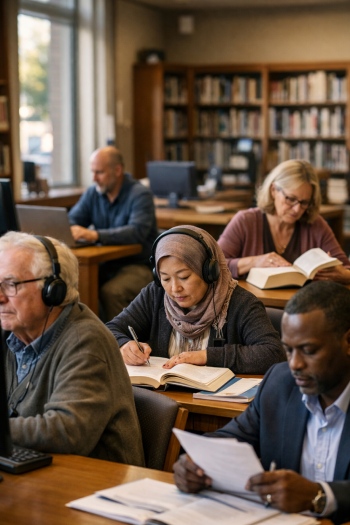
Libraries are still the most democratic in the field of education. They do not have any tuition unlike schools and universities. This is contrary to bookstores which need to be bought. Any person may enter the doors and get access to resources that would have otherwise cost him or her thousands of dollars.
Such access is real opportunity. Consider these scenarios:
A teenager studying opportunities of the university may obtain such information as guidebooks, career databases, and information about financial aid without spending a penny. An immigrant who knows English can borrow language materials and be exposed to free conversation groups. Without a job, an unemployed worker will be able to find employment, create a resume, and acquire new skills through the help of computers. Retirement provides an individual with an opportunity to deepen into hobbies and interests using large amounts of nonfiction.
Services in libraries are specifically designed to target underserved groups in public libraries. They offer:
- After-school homework support of home-deprived students.
- The early literacy programs hold pre-schoolers in readiness to succeed academically.
- Senior and other elderly people who do not cope with digital equipment should be trained in technology.
- Hospital outreach, prison outreach and remote community outreach.
The studies have continued to demonstrate that society that has well-resource libraries has better literacy levels, most education attainments and participation in civic engagements. The payback period is high. Each dollar invested in the public libraries yields a number of dollars of community good.
Promoting Formal and Informal Education
The formal education exists through school and academic libraries. University scholars rely on special collections, which nobody can afford to create. Clinicians receive current research that they need to care about patients through medical libraries. Law libraries make sure that the statutes, regulations as well as court decisions are availed to legal professionals and citizens.
However, the influence of education goes much deeper than formal education. A primary source of resourch in all levels in the archives, these includes at school and at work. A investigator who is a journalist who is researching on corporate pollution can get several decades of regulatory filings.
The Economic and Social Value of Libraries
Contemporary libraries have taken a new shape other than their conventional functions. Although they continue to loan out archive documents, they also provide space where people can convene as communities grow to use them. This development is based on real social needs which other institutions are unable to handle.
Go to a modern general purpose library and you may discover:
- Conference rooms where social organizations meet freely.
- 3D printers, recording studios and fabrication makerspaces.
- Cafe where people meet their neighbors in an informal way.
- Silent areas to work in by freelancers and remote workers.
- Spaces to host author talks, concerts and exhibitions.
Such functions are important since the problem of social isolation has emerged as a severe issue in the field of public health. Libraries are inclusive places, where individuals interact despite the differences among them. They are open to all people irrespective of income, background and social status. This inclusive role is becoming invaluable in a time when civic institutions are on the decline.
Social cohesion research indicates that social communities that have good library services claim they have high rates of trust, volunteerism, and have strong neighborhood networks. Libraries are known to literally hold communities together.
Innovation, Research, and Economic Development
Innovative ideas on archives and special collections are unforeseen. The historical records usually have the information that may be applicable to the present day problems. Sustainable farming practices may be informed by old agricultural reports. Past climatic data enhances climatic modeling. The history of the technology in patent records drives new inventions.
Business archives play specific economic purposes. The records are not kept by companies just to comply with the laws, but also to create intelligence in the company operations. Knowledge about the way in which products were created, the way in which markets have been built and the obstacles that have been overcome gives competitive edge. Archives can be relied on so that the knowledge that has been accumulated does not just fade away when businesses fail or merge.
Good archival infrastructure also leads to the development of regions. Heritage tourism is a source of a lot of revenue. The study of genealogy takes a visitor to the place where his or her ancestors resided. Movies and TVs films utilize archival photos and videos, which generates employment in the area.
The economic case of library and archive funding is not much valued. The returns created by such institutions are much greater than their expenses and the gains spread widely instead of being concentrated in personal profits.
The Digital Challenge: Preservation in the 21st Century

Digital technology has transformed preservation work, creating both opportunities and crises. On one hand, digitization allows institutions to share collections globally and protect fragile originals from handling wear. On the other hand, digital materials present unprecedented preservation challenges.
The problems are technical and practical. Digital files require specific hardware and software to remain accessible. Formats become obsolete as technology changes. The floppy disks of the 1980s are already unreadable without specialized equipment. The files we create today will face similar obsolescence within decades.
Born-digital materials—those created in digital form rather than digitized from analog sources—pose particular difficulties. These include:
- Government records now created and stored electronically
- Email correspondence that replaces paper memos
- Digital photographs that never exist as prints
- Websites and social media that document contemporary life
- Databases containing essential statistical information
Preserving these materials requires constant attention and resources. Files must be migrated to new formats before old ones become unreadable. Metadata must be maintained so future users understand what documents contain. Storage systems must be upgraded and secured against failure.
Unlike books, which remain readable for centuries if properly stored, digital materials require active, ongoing intervention. This demands funding and expertise that many institutions struggle to provide.
Balancing Access with Privacy and Security
Digital preservation also raises complex ethical questions. Archives have always managed tensions between access and privacy. Medical records, legal proceedings, and personal correspondence contain sensitive information that should not be publicly available. Traditional archives addressed this through time limits, restricted access, and redaction.
Digital materials complicate these protections. Search technology makes it possible to find personal information instantly across millions of documents. Data mining techniques can reveal patterns invisible to human readers. The scale of digital collections makes individual review impractical.
Institutions must navigate between competing values:
- The public interest in transparent government and historical documentation
- Individual privacy rights regarding personal information
- Security concerns about sensitive operational details
- Technical capabilities and limitations of access systems
There are no simple solutions. Different archives adopt different approaches based on their mandates, legal frameworks, and ethical commitments. What matters is that institutions think carefully about these questions rather than assuming that maximum access or maximum restriction serves the public interest.
Threats and Challenges: Why Advocacy Matters
Despite their demonstrated value, libraries and archives face persistent funding challenges. Economic downturns often trigger cuts to cultural institutions viewed as non-essential. Political leaders may undervalue long-term preservation compared to immediate service delivery. Administrative reforms sometimes consolidate or eliminate specialized positions essential to archival work.
The consequences of underfunding are gradual but severe:
- Backlogs of unprocessed collections that researchers cannot access
- Deterioration of physical materials due to inadequate storage conditions
- Loss of institutional knowledge as experienced staff retire
- Inability to adopt new technologies that would improve services
- Reduced hours and services that limit public access
These problems compound over time. Once processing backlogs develop, they become increasingly difficult to clear. Once materials deteriorate, restoration becomes more expensive than preventive care would have been. Once expertise is lost, rebuilding capacity takes years.
Advocacy for library and archive funding requires making visible the invisible work of preservation. It means explaining to decision-makers and taxpayers why these institutions matter not just for today's users but for generations yet unborn.
The Danger of Historical Erasure
Perhaps the gravest threat to archives is deliberate destruction or neglect of politically inconvenient records. Throughout history, regimes have destroyed documents to rewrite history, conceal crimes, or prevent accountability. This pattern continues today.
Recent examples include:
- Government agencies failing to preserve records of controversial decisions
- Corporations destroying documents relevant to ongoing litigation
- Political leaders removing archival materials for personal retention
- Institutions selling or disposing of collections to free up space
Digital records are particularly vulnerable to selective deletion. Unlike paper files, which leave physical traces of removal, digital deletions can be nearly undetectable. Without strong records management laws and vigilant enforcement, significant portions of our documentary heritage simply vanish.
Civil society must remain alert to these dangers. Professional archivists need legal protections for whistleblowing when they observe improper destruction. Citizens need access laws with genuine enforcement mechanisms. Institutions need clear mandates and adequate resources to fulfill their preservation responsibilities.
Investing in Our Collective Memory
Libraries and archives do more than store old books and papers. They maintain the connective tissue of civilization. They ensure that knowledge accumulates rather than dissipating, that experiences can be shared across time, and that communities remember who they are and how they got here.
The value of these institutions is not abstract. It manifests in concrete ways every day. A student finds the source needed to complete a thesis. A family discovers the immigration record of a great-grandparent. A journalist exposes corruption using decades-old documents. A community celebrates its heritage through an exhibition drawn from local collections. A democracy functions more transparently because citizens can access government records.
These outcomes require investment. Preservation costs money. Access requires staff. Digital sustainability demands ongoing technical infrastructure. The question is not whether we can afford to support libraries and archives, but whether we can afford not to.
Consider what we lose when these institutions fail. We lose the ability to learn from past mistakes because the records of those mistakes disappear. We lose the capacity to hold power accountable because the evidence of wrongdoing decays or gets destroyed. We lose our sense of continuity with those who came before us and our ability to speak to those who will come after.
With the kind support of: